
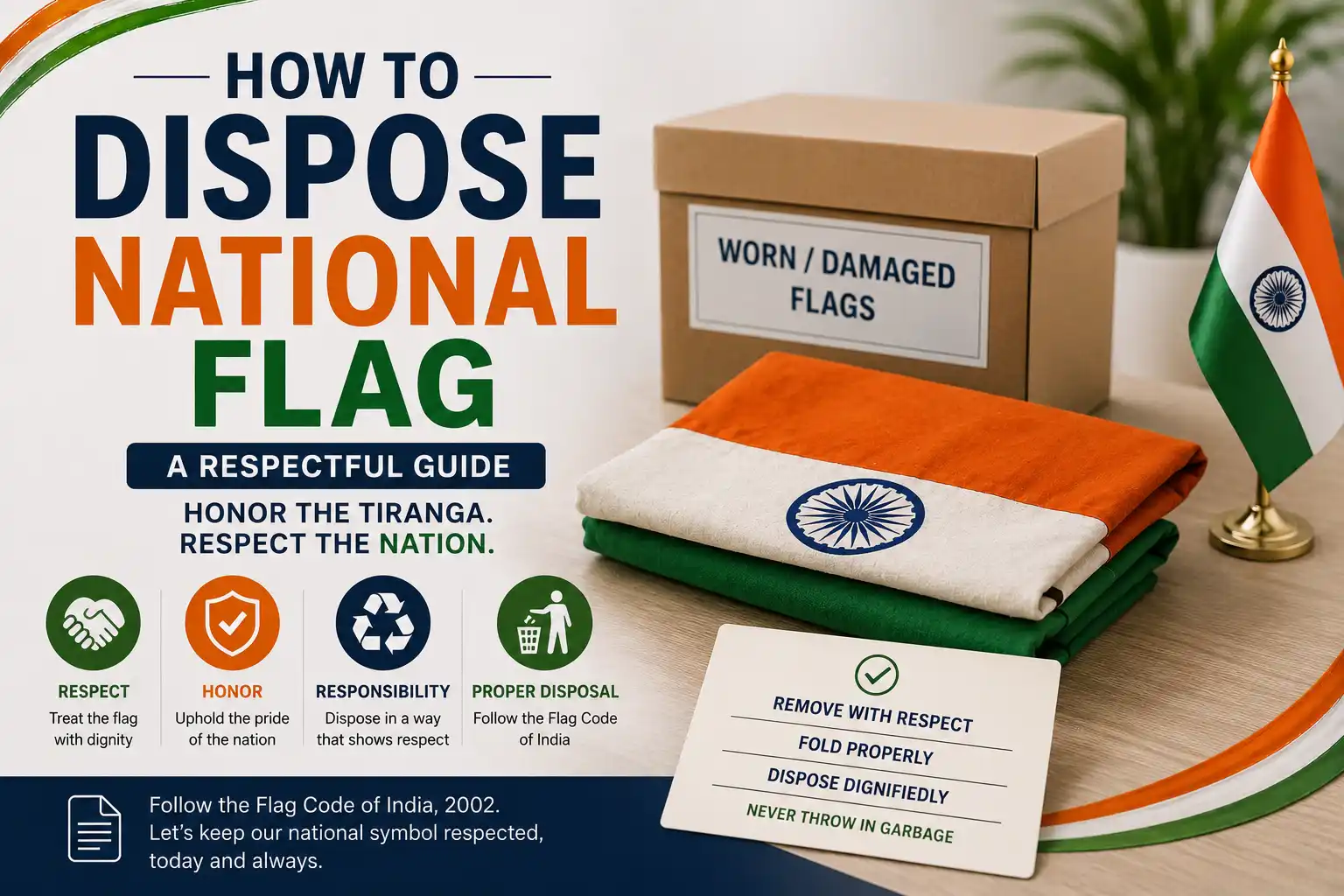
The national flag is more than a piece of fabric—it is a symbol of a nation’s identity, sovereignty, unity, and pride. In India, the Tiranga holds deep emotional and constitutional significance. Because of this, an old, damaged, faded, or worn-out Indian National Flag should never be treated like ordinary waste.
So, how should you dispose of the National Flag respectfully? The answer depends on the condition of the flag and the applicable rules governing the display and handling of the Indian National Flag.
Why Proper Disposal of the National Flag Matters
The Indian National Flag represents the nation and deserves to be handled with dignity throughout its entire life cycle—from manufacturing and display to storage and eventual disposal.
A flag may eventually become unsuitable for display because of:
- Fading due to prolonged exposure to sunlight
- Torn or frayed fabric
- Stains or significant damage
- Worn-out stitching
- Damage caused by weather conditions
- General deterioration over time
Once a flag is no longer in a condition suitable for dignified display, it should be removed and disposed of respectfully.
How to Dispose of the Indian National Flag
Under the Flag Code of India, damaged or soiled National Flags should be destroyed in a manner consistent with the dignity of the National Flag. The preferred practice is respectful disposal, traditionally by burning or another dignified method.
The important principle is that the National Flag should not simply be thrown into a garbage bin or left with ordinary waste.
1. Check the Condition of the Flag
Before disposing of a flag, determine whether it can still be used.
If the flag is only temporarily dirty, it may be possible to clean and properly store it. However, if it is torn, badly faded, damaged, or otherwise unsuitable for display, it should be retired.
2. Remove the Flag from Display
A damaged flag should be removed from its pole or display area carefully.
Do not allow the flag to drag on the ground, become mixed with waste, or remain exposed to conditions that could cause further damage.
3. Fold and Handle It Respectfully
Handle the flag carefully and keep it clean and protected while arranging for its disposal.
Avoid crumpling it, stepping on it, or placing it casually with other discarded materials.
4. Use a Dignified Disposal Method
The Flag Code of India states that damaged or soiled National Flags should be destroyed as a whole in a manner consistent with the dignity of the National Flag.
Traditionally, respectful private disposal by burning has been followed. If this method is used, it should be carried out safely, privately, and in accordance with applicable local fire and safety requirements.
For organizations, institutions, schools, offices, and public bodies, it is advisable to follow their established protocol or seek guidance from the appropriate local authority when necessary.
5. Do Not Throw the Flag in the Garbage
One of the most important things to remember is that an Indian National Flag should not be disposed of as ordinary household or commercial waste.
Throwing the Tiranga into a garbage bin can be disrespectful and may also result in improper handling after disposal.
What About Paper and Plastic National Flags?
National Flags made from paper or other materials are sometimes used during national celebrations and public events.
These flags should also be treated respectfully. The Flag Code provides that paper flags should not be discarded or thrown on the ground after the event. They should be collected and disposed of privately, keeping the dignity of the National Flag in mind.
This is particularly important after events such as:
- Republic Day celebrations
- Independence Day celebrations
- School functions
- Government events
- Corporate celebrations
- Cultural programs
- Sports events
- National-day ceremonies
Event organizers should arrange a proper collection system so that flags are not left scattered on roads, grounds, or public spaces.
Can a Damaged National Flag Be Recycled?
Recycling depends on the material and the applicable disposal process. However, the flag should not be handed over to a recycling facility in a way that compromises its dignity.
Before recycling or repurposing a National Flag, organizations should ensure that the process complies with the applicable provisions of the Flag Code of India and does not result in the flag being treated disrespectfully.
The safest approach for a damaged National Flag is to follow an appropriate dignified disposal procedure rather than treating it like ordinary textile waste.
Can You Throw Away an Old Indian Flag?
No. An old National Flag should not simply be thrown into a dustbin.
If it is still in good condition, it should be properly stored for future use. If it has become damaged or soiled beyond suitable use, it should be disposed of respectfully in accordance with the Flag Code of India.
The key distinction is between ordinary waste disposal and dignified retirement of the National Flag.
How Should Schools Dispose of Old National Flags?
Schools frequently use Indian National Flags during Independence Day, Republic Day, assemblies, competitions, and other events.
Schools can establish a simple flag-retirement procedure:
- Collect damaged or worn-out flags after events.
- Inspect their condition.
- Separate flags that are still suitable for future use.
- Store usable flags properly.
- Keep damaged flags separately.
- Arrange dignified disposal according to the Flag Code of India.
- Educate students about respecting the National Flag.
This can also be used as an opportunity to teach students about national symbols and civic responsibility.
How Should Offices and Businesses Handle Damaged Flags?
Companies, offices, hotels, factories, residential societies, and commercial establishments that display the Indian National Flag should periodically inspect their flags.
A practical system is to maintain a flag inventory and inspection schedule. Before important national occasions, organizations can check:
- Fabric condition
- Colour and fading
- Stitching
- Dimensions
- Pole and mounting hardware
- Cleanliness
- Overall suitability for display
Damaged flags should be removed from active use and handled through an appropriate dignified disposal process.
What Should You Do With a Torn National Flag?
If your Indian National Flag is torn or badly damaged, do not continue displaying it.
Instead:
Remove → Inspect → Store temporarily with dignity → Arrange proper disposal.
Do not cut the flag into pieces for ordinary household use, use it as cleaning cloth, or place it in a garbage bag with other waste.
Importance of the Flag Code of India
The Flag Code of India, 2002 provides guidelines relating to the display and use of the Indian National Flag. It was introduced to bring together various rules and practices concerning the National Flag.
The Code emphasizes the dignity and honour associated with the National Flag. Therefore, responsible flag handling does not end when the flag is taken down—it also includes how an old or damaged flag is treated afterward.
Best Practices for National Flag Disposal
Whether you are an individual, school, company, event organizer, or government institution, keep these practices in mind:
- Never throw the National Flag into ordinary garbage.
- Do not allow the flag to touch the ground unnecessarily.
- Do not use a damaged flag for household purposes.
- Remove faded or torn flags from display.
- Store usable flags properly.
- Collect paper flags after public events.
- Educate event participants about respectful flag handling.
- Follow the Flag Code of India when disposing of damaged flags.
- Follow local safety requirements for any disposal method involving fire.
Frequently Asked Questions
Can I throw an old Indian National Flag in the dustbin?
No. A National Flag should not be treated as ordinary waste. If it is damaged or soiled beyond use, it should be disposed of in a dignified manner consistent with the Flag Code of India.
What should I do with a torn Indian Flag?
A torn flag should be removed from display and handled respectfully. It should then be disposed of according to the applicable provisions of the Flag Code of India.
Can I burn the Indian National Flag?
The Flag Code recognizes destruction of damaged or soiled National Flags in a manner consistent with their dignity. Burning has traditionally been used as a private disposal method, but any such activity must be carried out safely and in accordance with applicable local fire and safety requirements.
Can paper Indian flags be thrown on the ground after Independence Day?
No. Paper flags should not be thrown on the ground or discarded carelessly after celebrations. They should be collected and disposed of privately and respectfully.
Can a damaged National Flag be reused as cloth?
No. A National Flag that is no longer suitable for display should not be repurposed casually as household cloth, cleaning material, or another ordinary item.
Who should dispose of damaged National Flags?
Individuals and organizations responsible for the flags should ensure that damaged or soiled flags are handled and disposed of respectfully in accordance with the Flag Code of India.
Conclusion
The Indian National Flag deserves respect not only when it is proudly displayed but also when it reaches the end of its usable life. A faded, torn, or damaged Tiranga should never be thrown into ordinary waste or treated like an everyday piece of fabric.
By following the Flag Code of India, handling damaged flags carefully, collecting paper flags after celebrations, and arranging dignified disposal, individuals and organizations can demonstrate respect for the national symbol.
Respecting the Tiranga means respecting it from the moment it is raised until the moment it is respectfully retired.